I did not plan to write this article. Then I watched the official United States Marine Corps birthday video short, and it made me think about the pride each of us Marines carries for the rest of our lives.
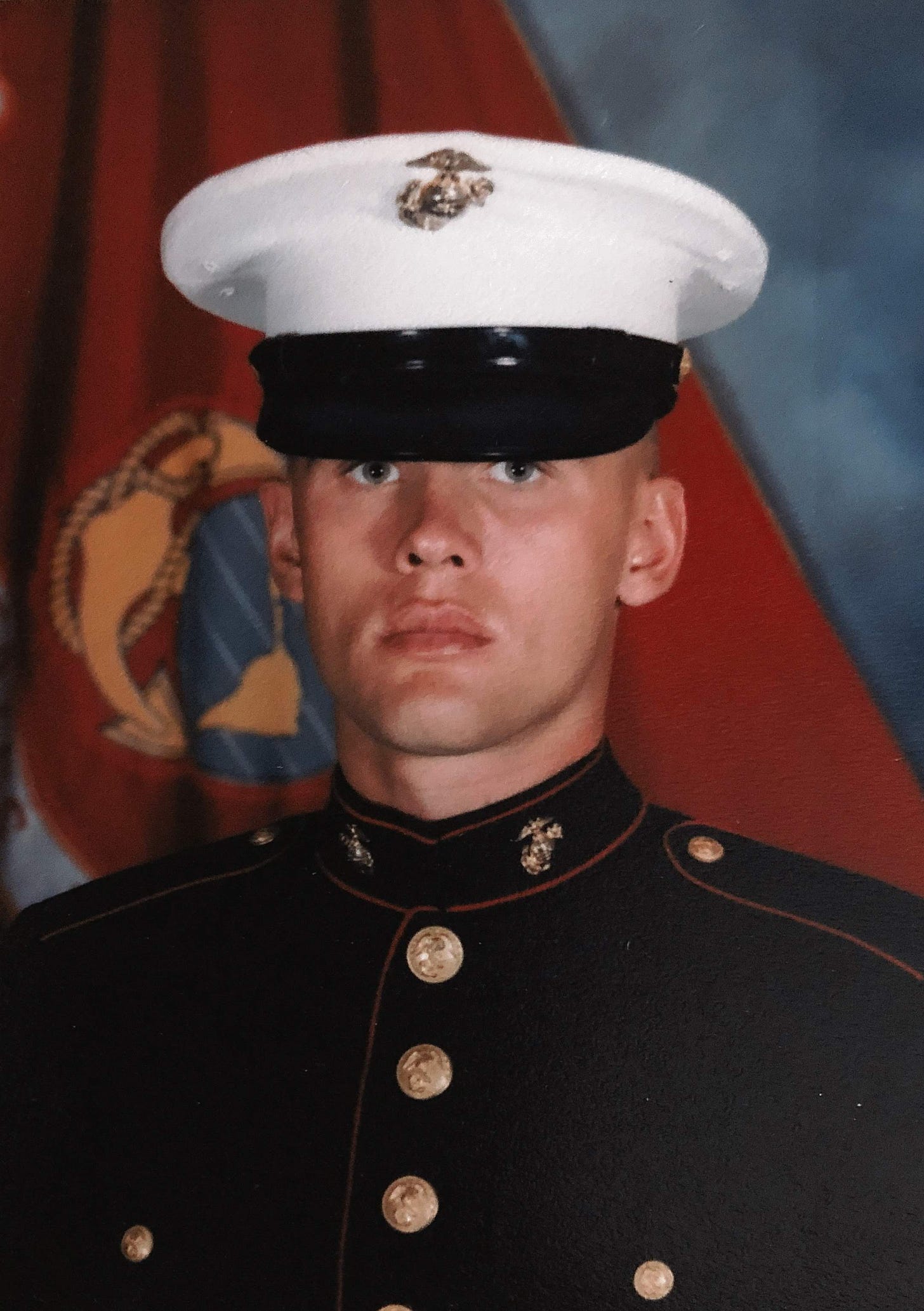
In corporate life, we rarely mention that we served. Yet, without question, the Corps produces some of the best leaders in the world.
I come from humble beginnings. I arrived in the United States just before I turned eighteen. My father and my grandmother were already here, and both worked as janitors and cleaning staff for the rest of their working lives. On weekend nights, I cleaned an engineering office building and came home at three in the morning. After I graduated from high school, a Marine recruiter called. I said yes on the spot. I shipped to boot camp in San Diego while I still barely spoke English.
I am not special, but how is it that, with no experience, after intense late-night study at a doorman’s desk, and only a year after ending the service, I landed a software engineer position at Rolling Stone magazine, the most prestigious music publication of its day? A year after that, I joined a 125-person technology startup in Chicago, where I became Director of Technology.
Every Marine’s story is different, because we serve all over the world.
For me, boot camp alone was the most character-shaping school of my life. After it, the Corps sent me to infantry and desert training. By the time I reached the “fleet,” I was certain of one thing: after this, nobody could intimidate me. I went in a boy and graduated a man.
Then they sent me to the Marine Corps Engineer School to study electronics. There is nothing prestigious about that school; it is certainly not an Ivy League name. But it was brutal in a good way. We got up early, did Marine physical training, and sat in classes all day. The courses were dense, with plenty of real-world application. I took my share of 400-volt electrocutions troubleshooting high-voltage boards. It was exhausting, and it was worth it.
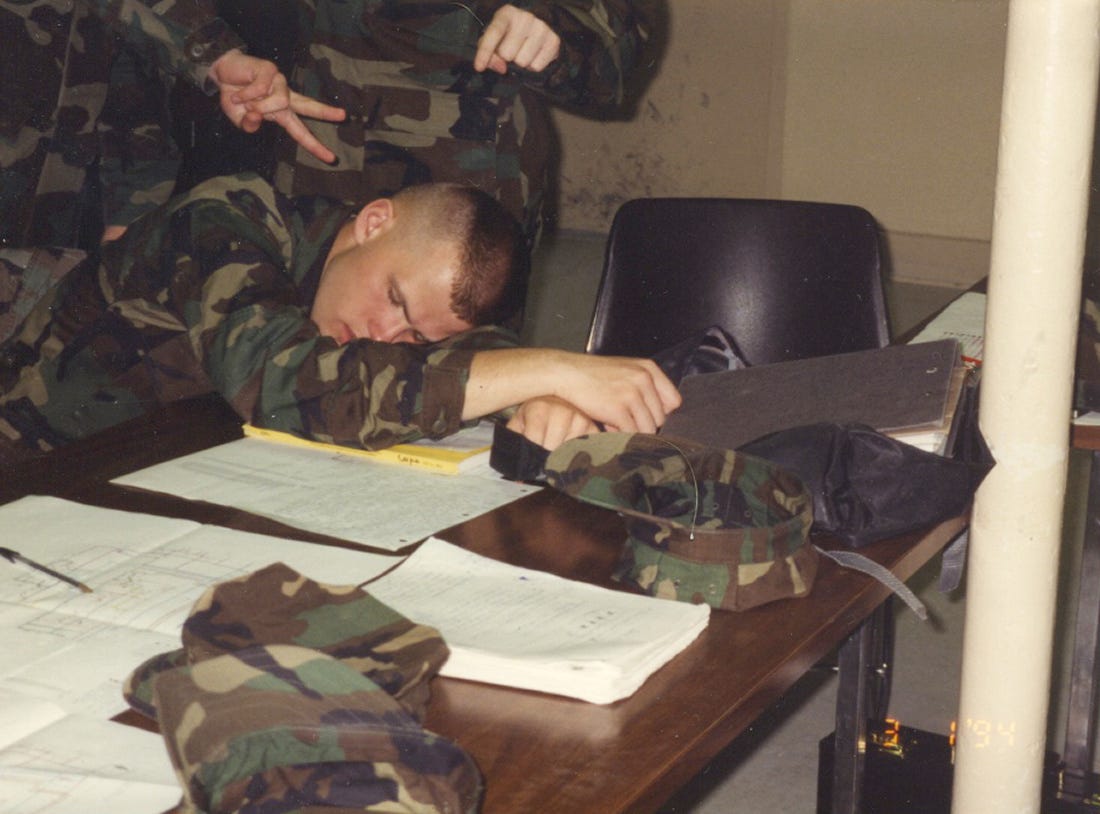
Later, the Marines sent me to Okinawa, Japan, where I spent a few years. I studied the cultural anthropology of East Asia with the University of Maryland’s Asian Division, right on base at Camp Foster. The behavioral sciences became my lifelong passion, and understanding why people do what they do is still at the core of how I lead.
On Okinawa, I also took the Total Quality Management course, which the Navy and Marine Corps called Total Quality Leadership (TQL). The program began in 1984, when the Navy asked its research center in San Diego whether statistical process control and quality methods could improve mission performance. The answer was yes, with one condition: the active participation of top leaders was the critical element. The approach was built on the ideas of W. Edwards Deming, the American who taught quality to Japanese industry after the war, and I was learning them in Japan. I learned kaizen, continuous improvement, and that a leader’s job is to drive out fear and help people do better work. Quality became a theme in my life.
Kaizen stayed with me longer than anything else from that course. In the West, it is often reduced to a productivity method, a way to squeeze another percent out of a factory floor. For me, it became a statement about the self: I am not fixed, and every current version of me is provisional. A person does not need a dramatic resolution. He needs the next small improvement, applied every day, and then the next one. That is how a night doorman studied his way into Rolling Stone, and it is still how I lead teams: find the next small improvement in the system, apply it, watch what happens, repeat. Toyota built its production system this way: just-in-time, making only what is needed, when it is needed, and in the amount needed. Software teams know its descendant today as the Kanban board. I was Agile before I knew the concept.
Kaizen also gave me the simplest tool I still use every day. Every fifteen minutes, I ask myself two questions: what have I just done to make my life better, and what should I do next to become a better human being? Later, as a consultant, I billed my time in quarter hours; the habit stayed with me and became my way to catch myself drifting. I still keep a fifteen-minute hourglass on my desk. Often the answer is to take a rest or a walk outside. On the days motivation lapses, I tell myself, “I am not a lazy person.” It helps me get up and keep going. I wrote about it in a separate post, The 15-minute rule of mindfulness.

People think Marine leaders lead by intimidation, and the movies certainly promote that picture. In reality, good Marine leaders are loved. In a corporation, unhappy people quit. In the Marines, your people follow you while bullets crack above your head. In a corporation, bad leaders lose money; in the Marines, whole platoons lose their lives.
Marine leaders are some of the finest managers you will ever meet. We are forged, not baked.
I am very proud of who I became in the Marine Corps.
Happy 251st birthday, Marines!
Tuesday, November 10, 2026
Semper Fidelis,
Uki D. Lucas (Cpl. Grizzly)
First published on Substack.